
Design capacity
Sea cages
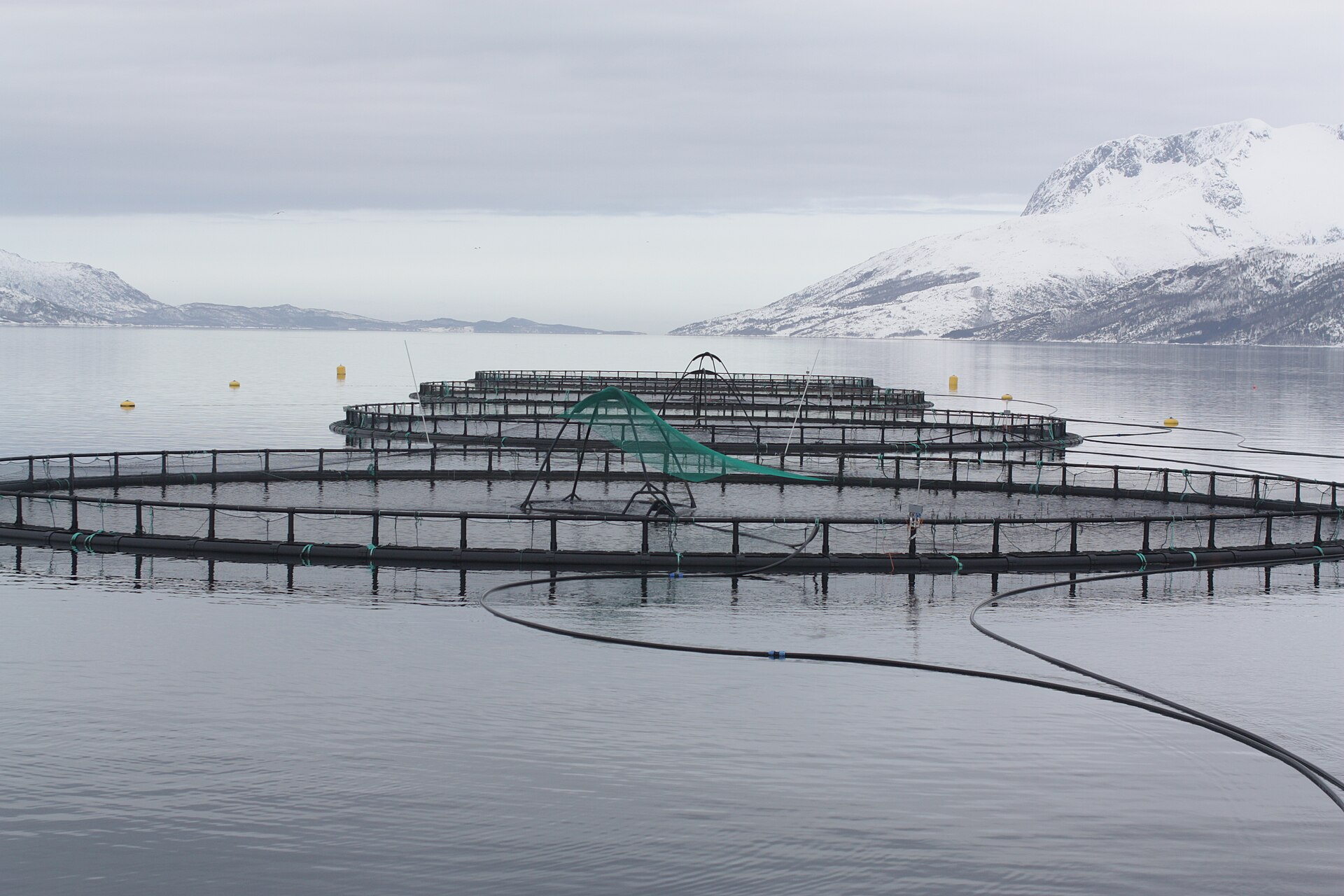
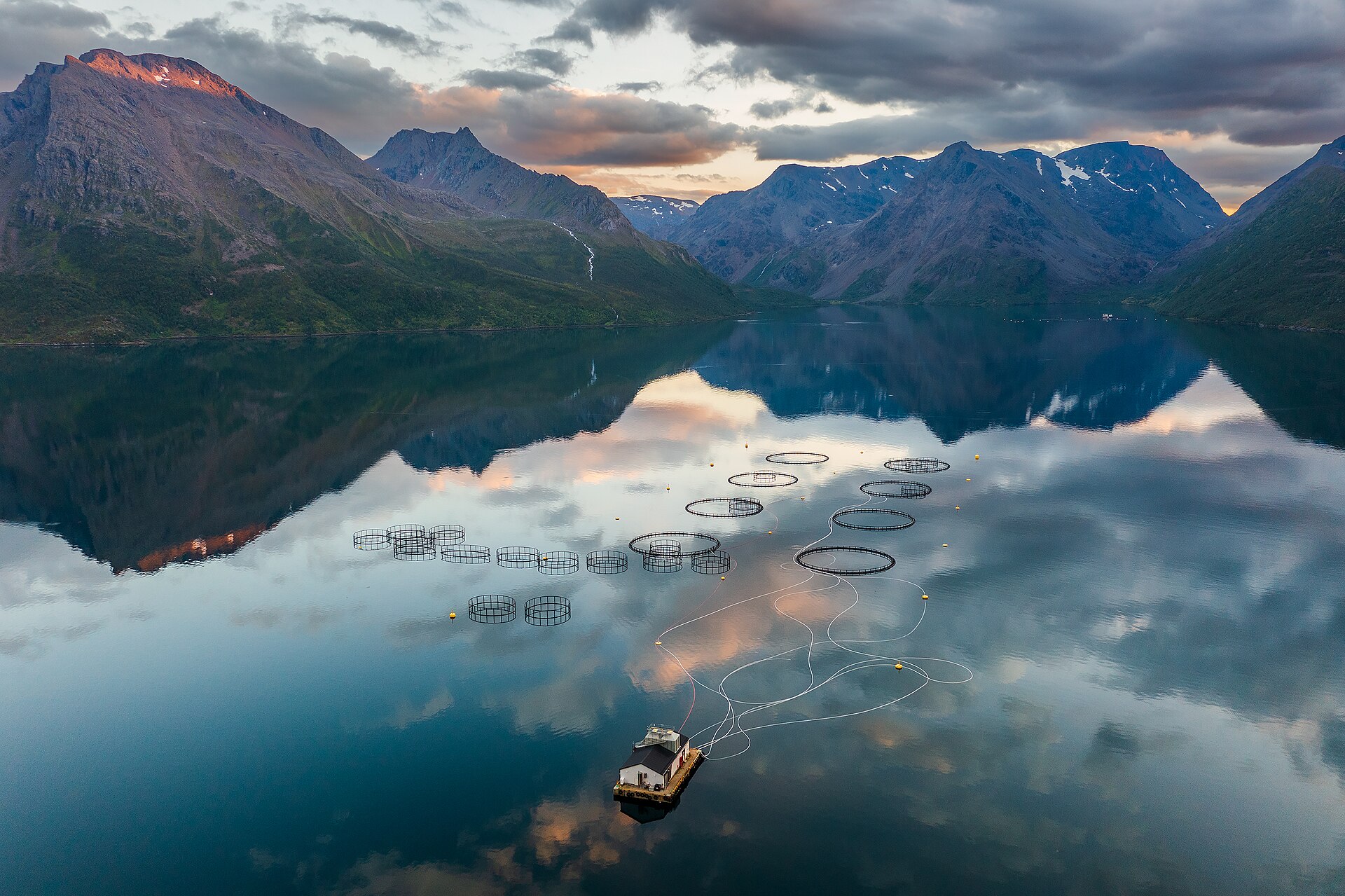
Floating circular cages in 250,000 m² of Arabian Gulf water.
A circular cage: HDPE ring, net, walkway.
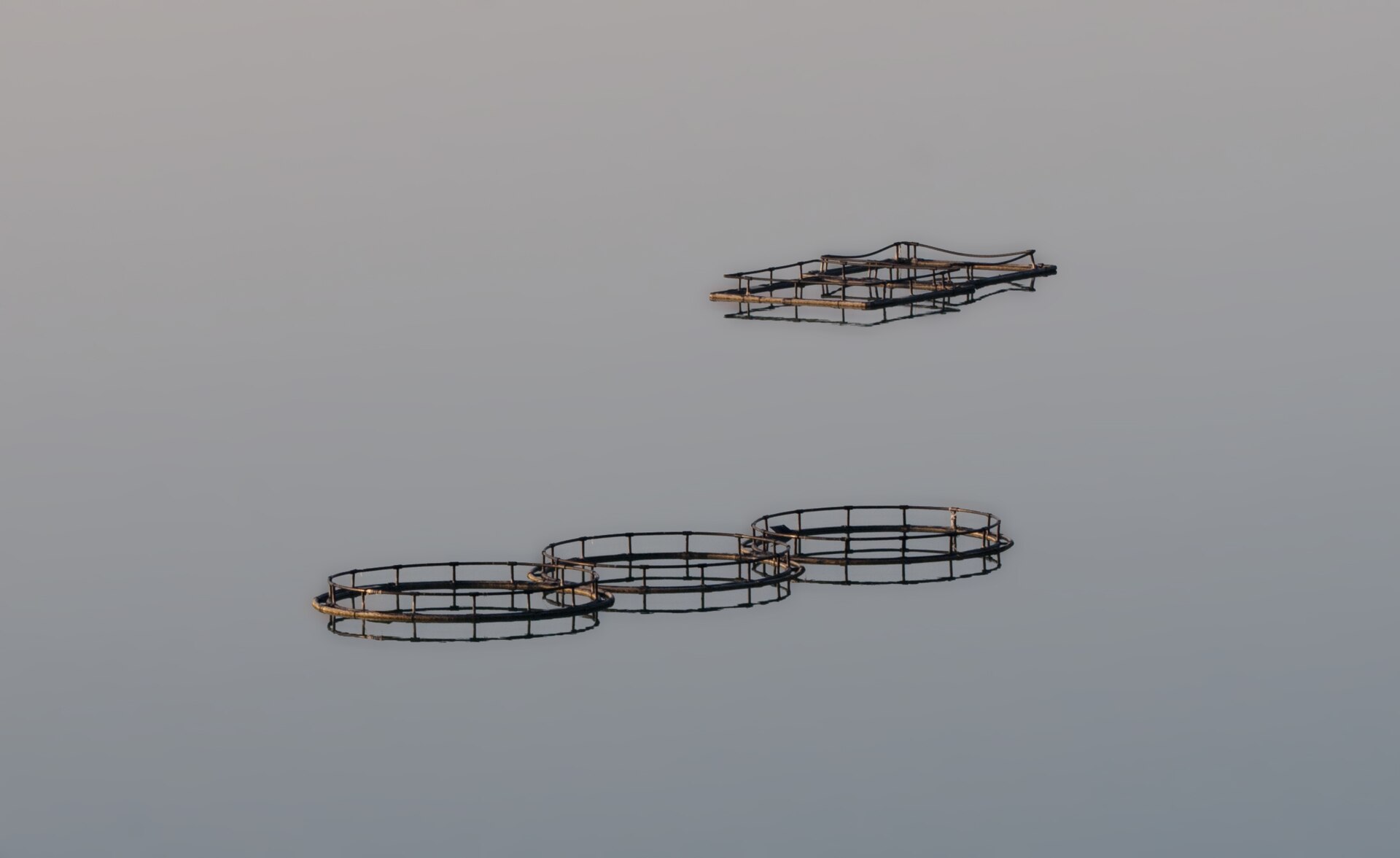
Rings on open water. The medium is the Gulf itself.
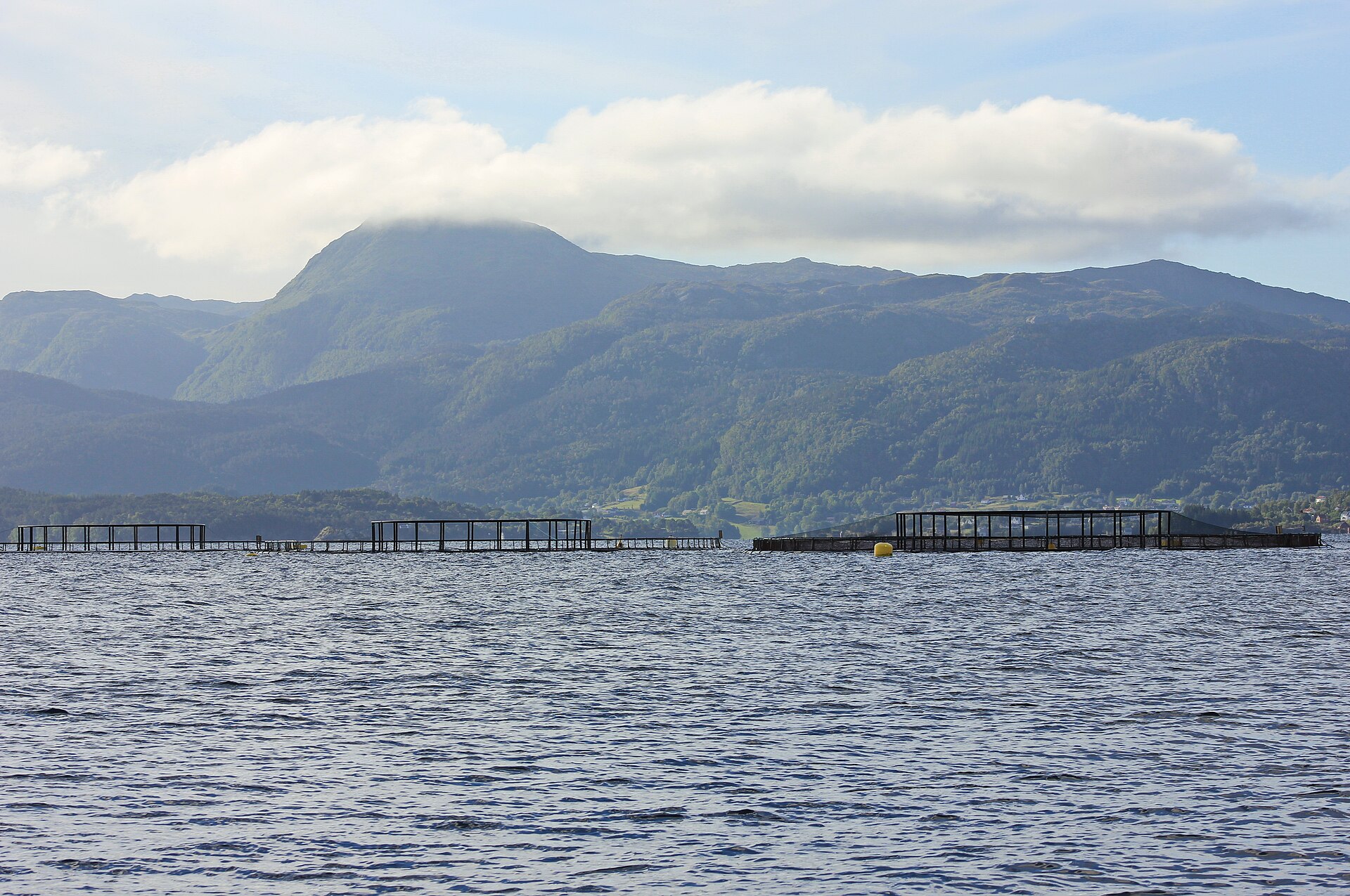
250,000 m² offshore beside Dalma for grow-out.
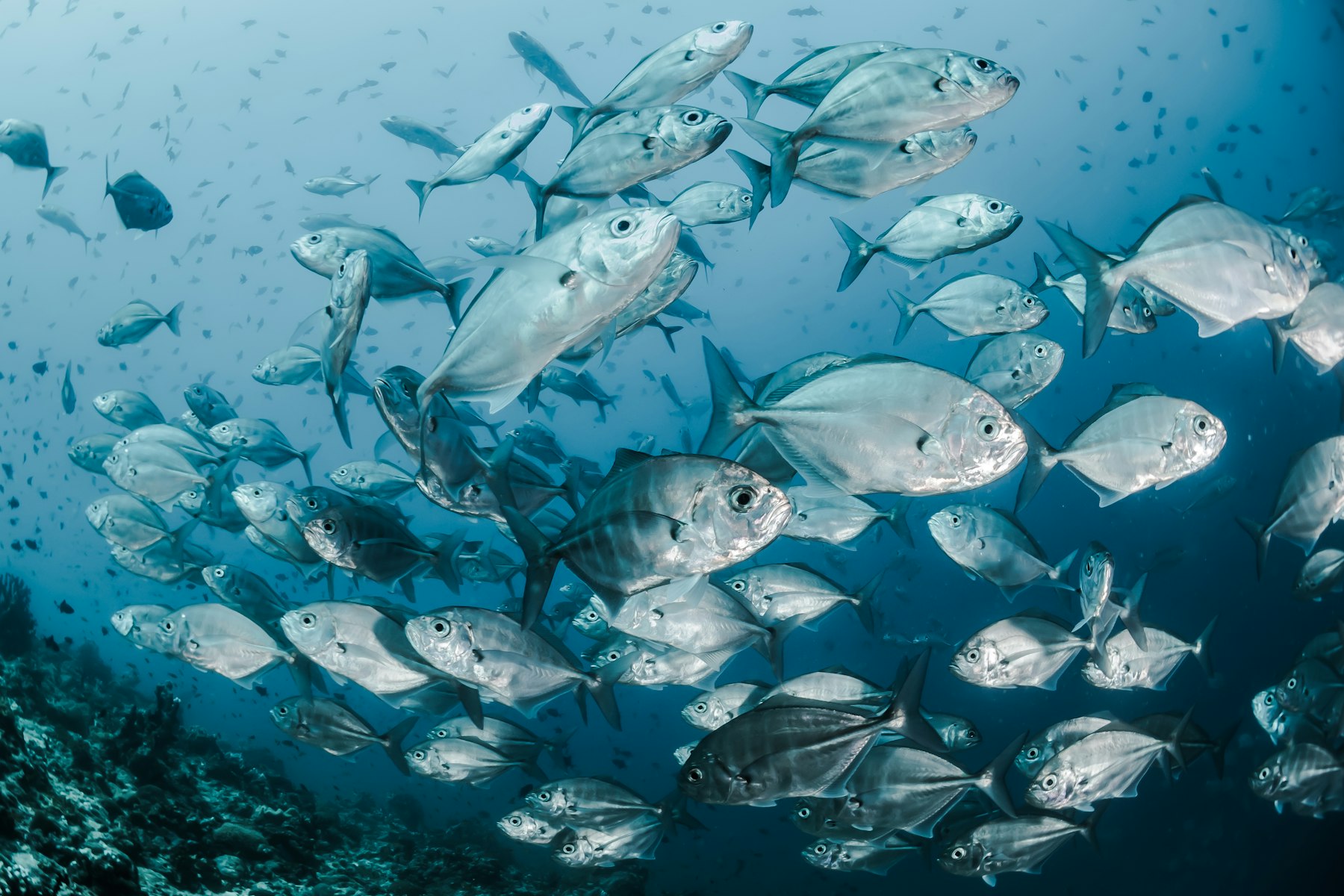
Fish live in real seawater: current, oxygen, temperature.
Juveniles leave the nursery for grow-out: a ring of HDPE pipe, a net hanging in the water column, a walkway for feeding and inspection. The fish live in real seawater — current, dissolved oxygen, the temperature of the Gulf — not in a tank painted blue.
The process is receive, stock, feed slowly, read the water, grow to harvest weight, then lift the crop. Divers, slow feeders and daily readings are how the rings are kept. A cage cannot be heated, filtered and lit like an onshore tank. It has to be stocked at a density the water will carry.
The offshore lease is 250,000 square metres beside Dalma. Design capacity of the cages is 20,000 tonnes, matched to processing on the same island. That is the long middle of cultivation, from fingerling to ice.
Nothing here is a claim that those tonnes have already been harvested. The figures are design capacities. The photographs are real aquaculture — rings on water — not generated images.
The process
How this plant is run, step by step.
Each step is cultivation work — water, feed, transfer, ice — not a portrait of the company.
01
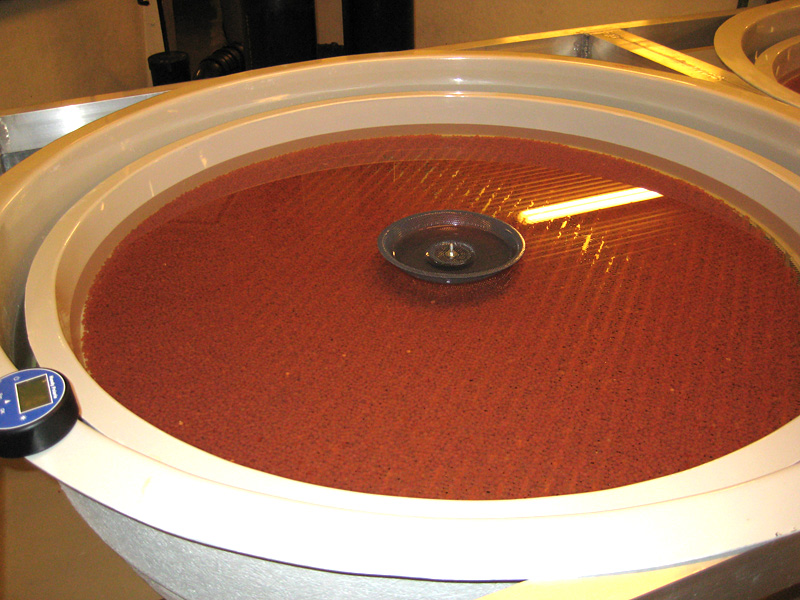
Receive juveniles from the hatchery
Fingerlings are meant to leave the Dalma nursery, not a crate at the harbour. The short crossing is the point of the platform: seed does not travel a country.
02
Stock circular floating cages
A cage is a ring of HDPE pipe, a net hanging in the water column, a walkway for feeding and inspection. Fish are stocked at a density the Gulf water will carry — not the density a painted tank might pretend.
03
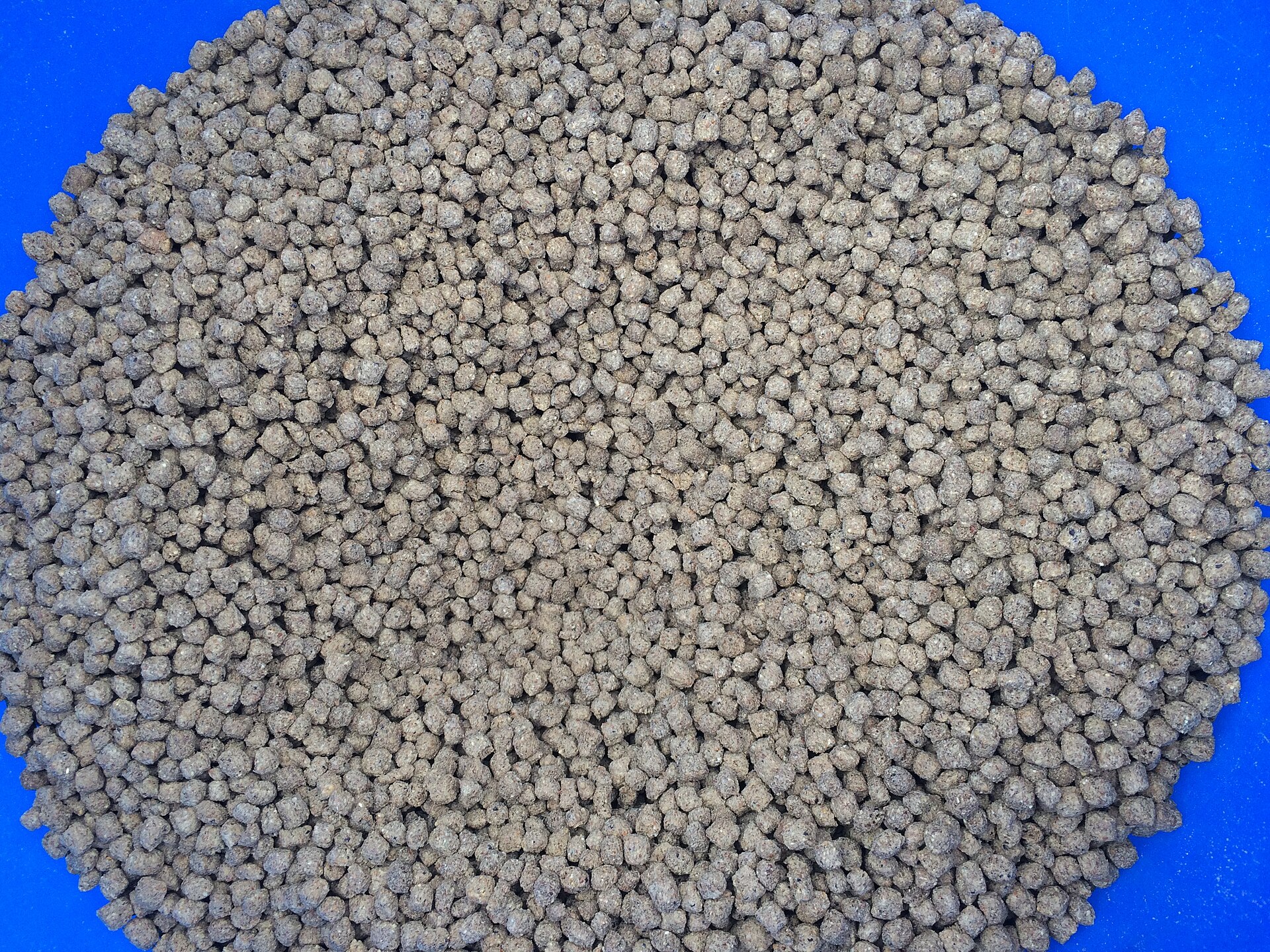
Feed on a measured schedule
Pellets from the island mill are dosed, not thrown. A feeding year is the long middle of cultivation. Hunger and waste are both failures of the same ration.
04
Read the water every day
Current, dissolved oxygen, salinity and temperature are the Gulf’s. Divers, slow fish and a daily reading are how the crop is kept. A cage cannot be heated or lit like an onshore tank.
05
Grow out to harvest weight
This is the long middle: from fingerling to a fish that can be harvested. Design capacity of the rings is 20,000 tonnes on 250,000 square metres of offshore water.
06
Take the crop from the ring
When fish reach harvest weight they are lifted from the cage and sent a short road to processing on the same island. Grow-out ends where ice begins.
In the chain
Four plants, in the order they are meant to work.
 01
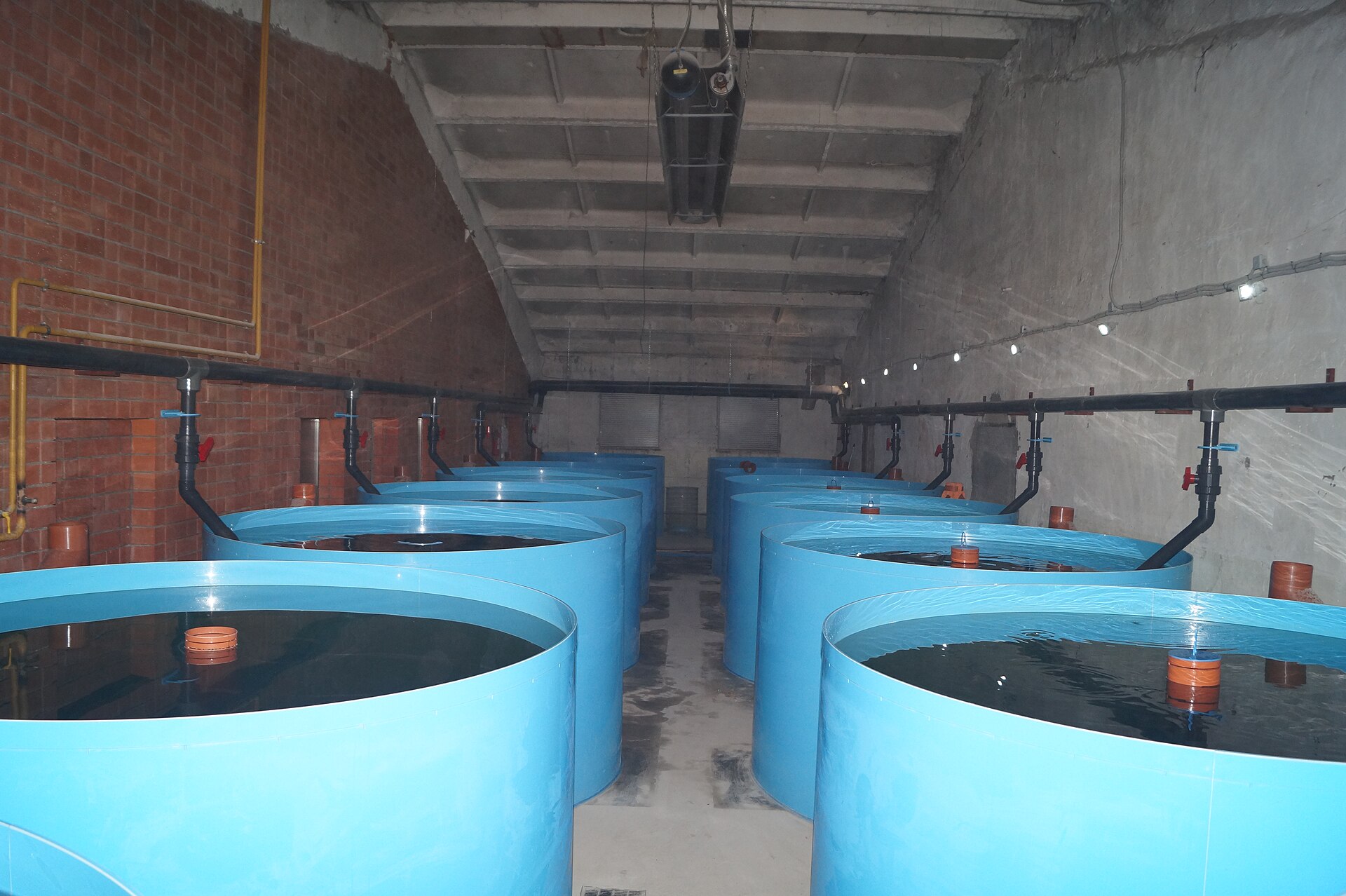
Hatchery
Broodstock, eggs, larvae and juveniles — seed for the cages, raised onshore.
Open the process- 02
Feed plant
Pellets mixed on Dalma, sized so feed is not the constraint on the cages.
Open the process - 03
Sea cages
Floating circular cages in 250,000 m² of Arabian Gulf water.
Open the process  04
Processing
Harvest, chill and prepare on the same island as the cages.
Open the process