
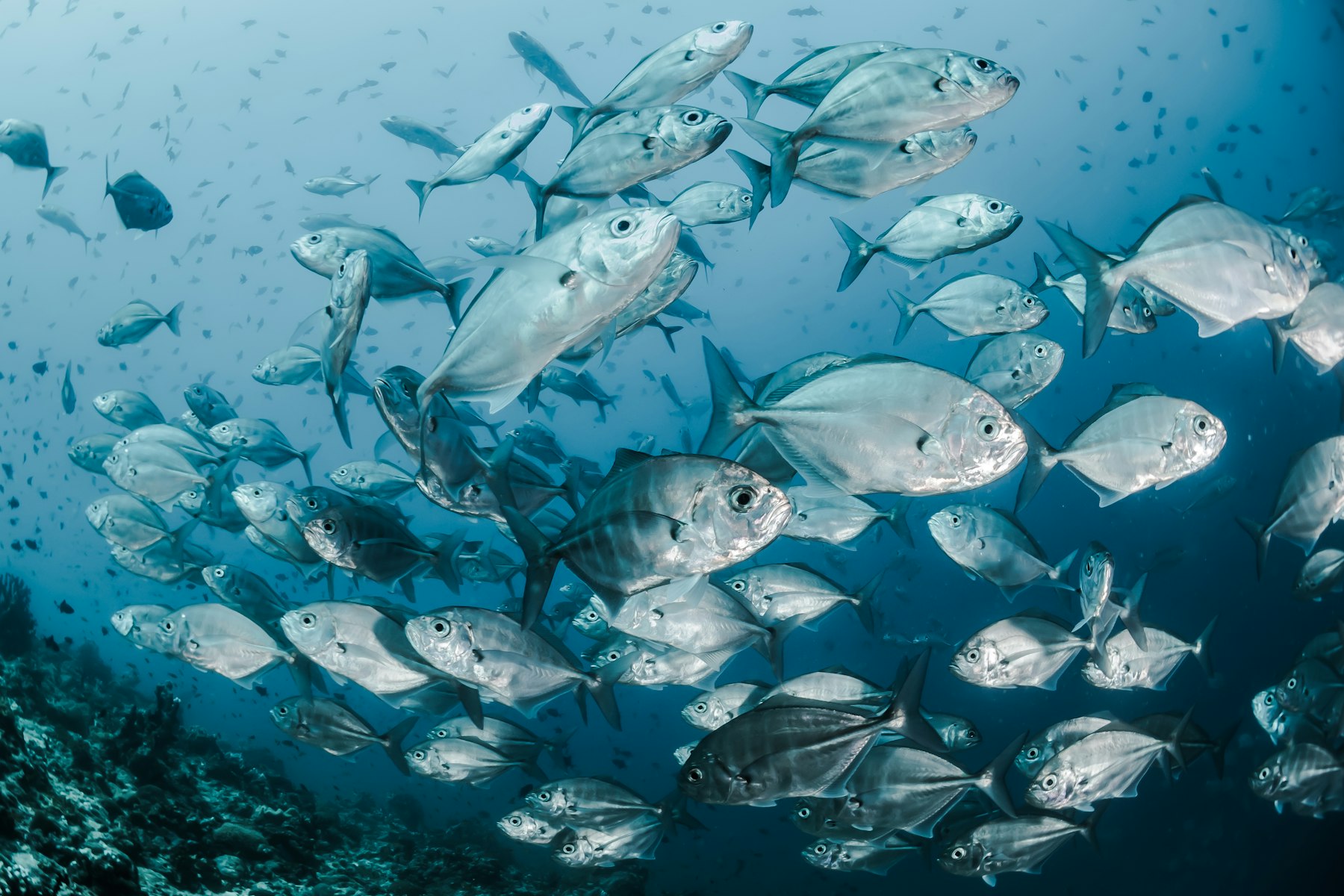
Cultivation
How marine fish are cultivated on Dalma.
Six public steps from a fertile egg to fish on ice — hatchery water, live feed, pellets, Gulf cages, water quality, then harvest and chill. This is the work, not a portrait.
- 01Eggs and first water
- 02Larvae, then juveniles
- 03Feed mixed beside the fish
- 04Grow-out in the open Gulf
- 05The crop is the water
- 06Harvest, chill, prepare
01
Eggs and first water
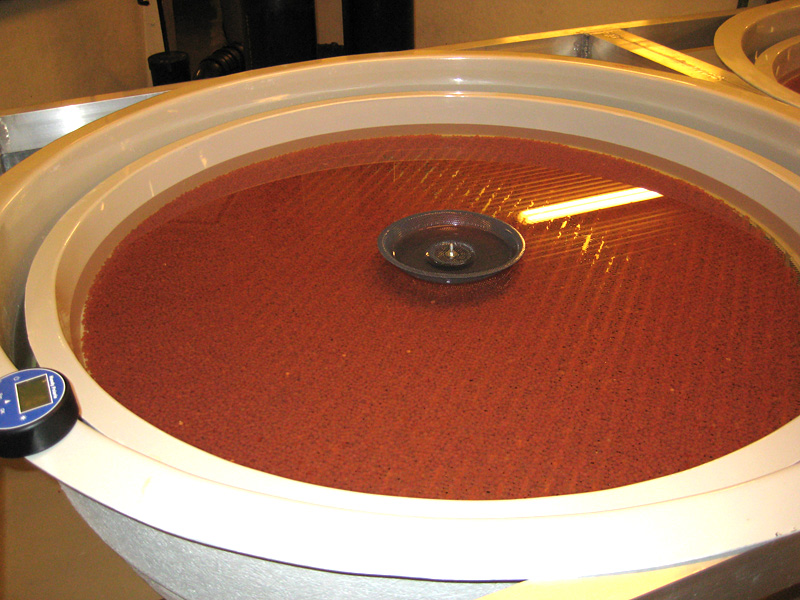
Cultivation begins before the cage. Broodstock are held onshore. Eggs are incubated in conical tanks, where a slow upwelling of water keeps them suspended until they hatch. This is the hatchery’s first job: turn a fertile egg into a larva that can feed.
02
Larvae, then juveniles
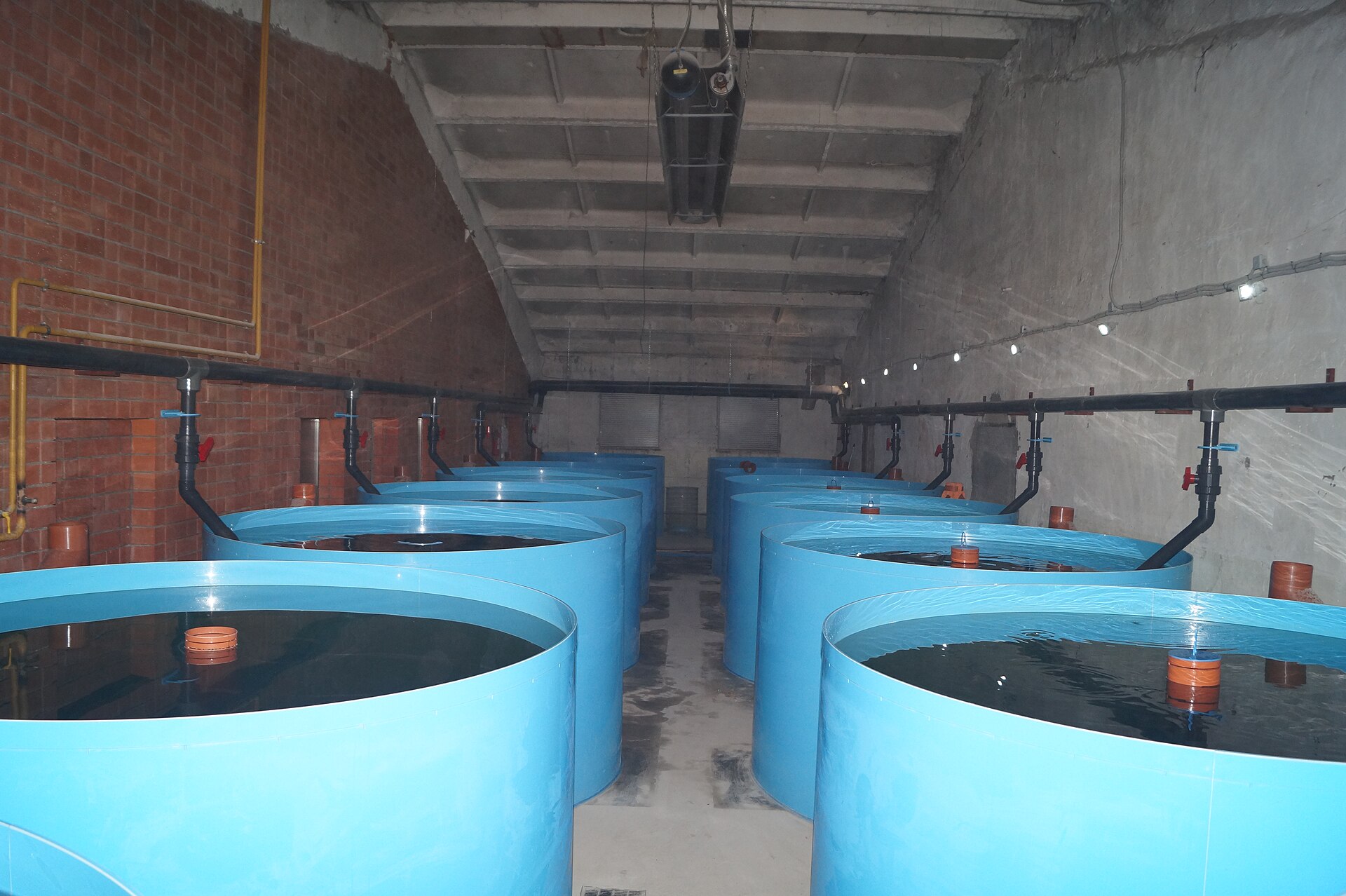
Newly hatched larvae are too small for dry feed. They take live food — rotifers, then brine shrimp — in round tanks with filtered, warmed, aerated water. As they grow they become fry, then fingerlings: juveniles stout enough to leave the nursery for the sea. AQUAFAQ’s hatchery is drawn for 40 million of those juveniles a year, so the cages are not waiting on imported seed.
03
Feed mixed beside the fish
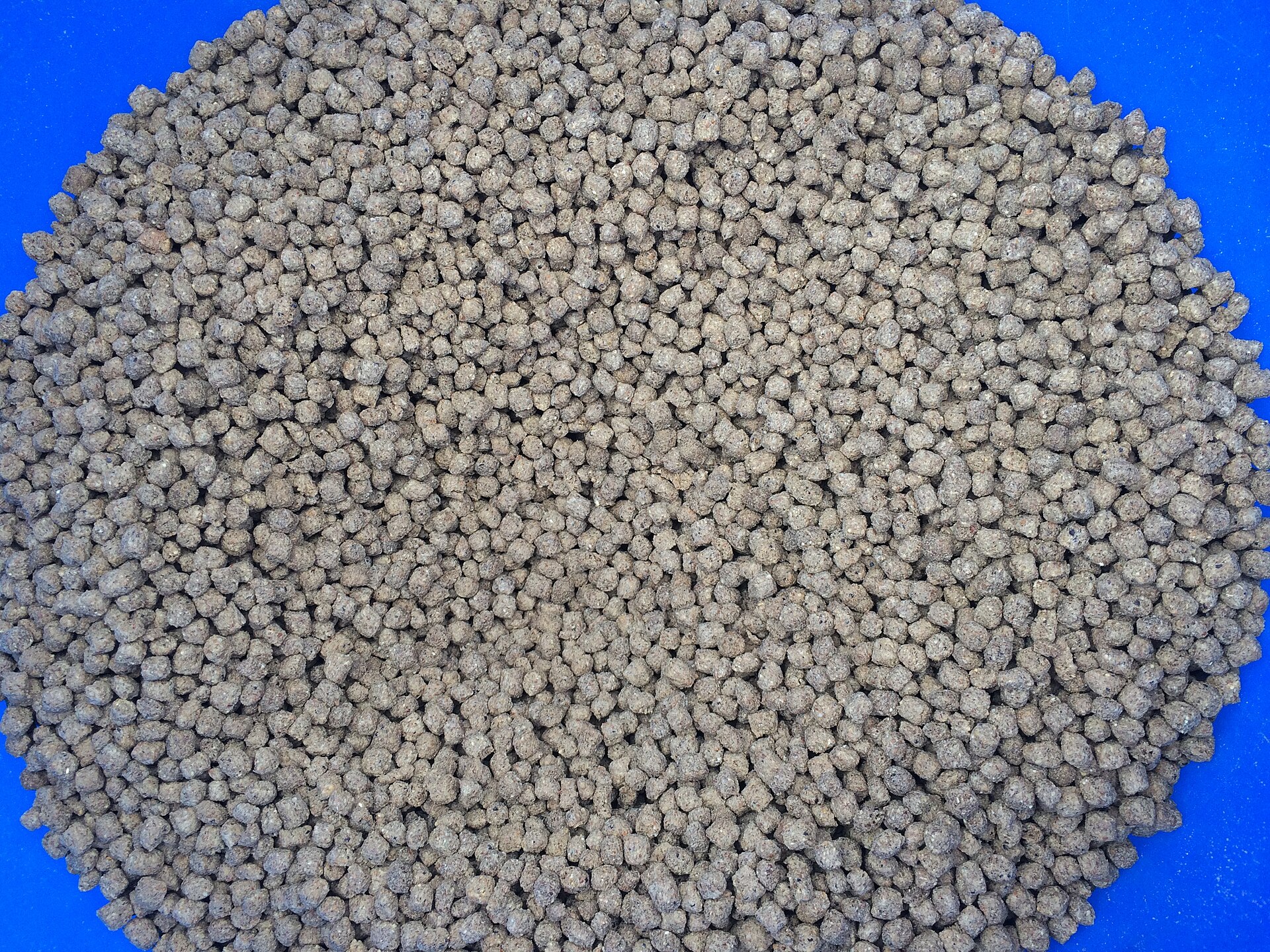
Grow-out fish eat compressed pellets: protein, oil, starch, vitamins, sized to the mouth of the animal. Automatic feeders dose those pellets into tanks and, later, into cages, so the ration is measured rather than dumped. The mill on Dalma is sized at 60,000 tonnes a year — three times the cage capacity — so feed is meant to sit ahead of the crop, not behind it.
04
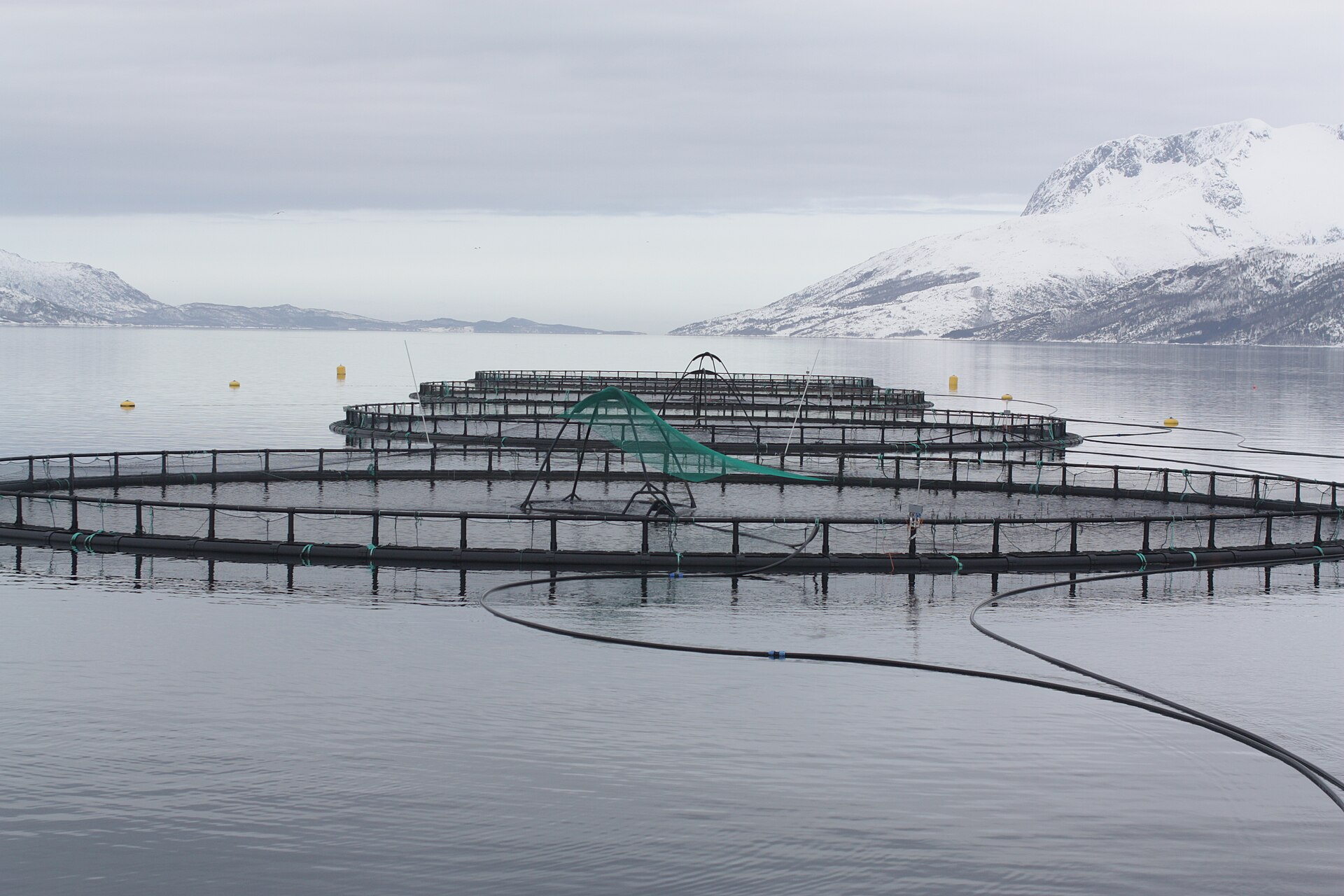
Grow-out in the open Gulf
Juveniles are transferred into floating circular cages: a ring of HDPE pipe, a net hanging in the water column, a walkway for feeding and inspection. The fish live in real seawater, with current, oxygen and the temperature of the Gulf. The offshore lease at Dalma is 250,000 square metres. Design capacity of the cages is 20,000 tonnes. That is grow-out: the long middle of cultivation, from fingerling to harvest size.
05
The crop is the water
Aquaculture is not agriculture with a different animal. The medium is water. Density, dissolved oxygen, salinity, ammonia and temperature decide whether fish grow or fail. In cages the Gulf does most of that work. In the hatchery, and later in shrimp RAS, the same work is done by pumps, filters and sensors. Health is daily: a slow feeder, a diver, a lab reading — not a harvest-day inspection.
06
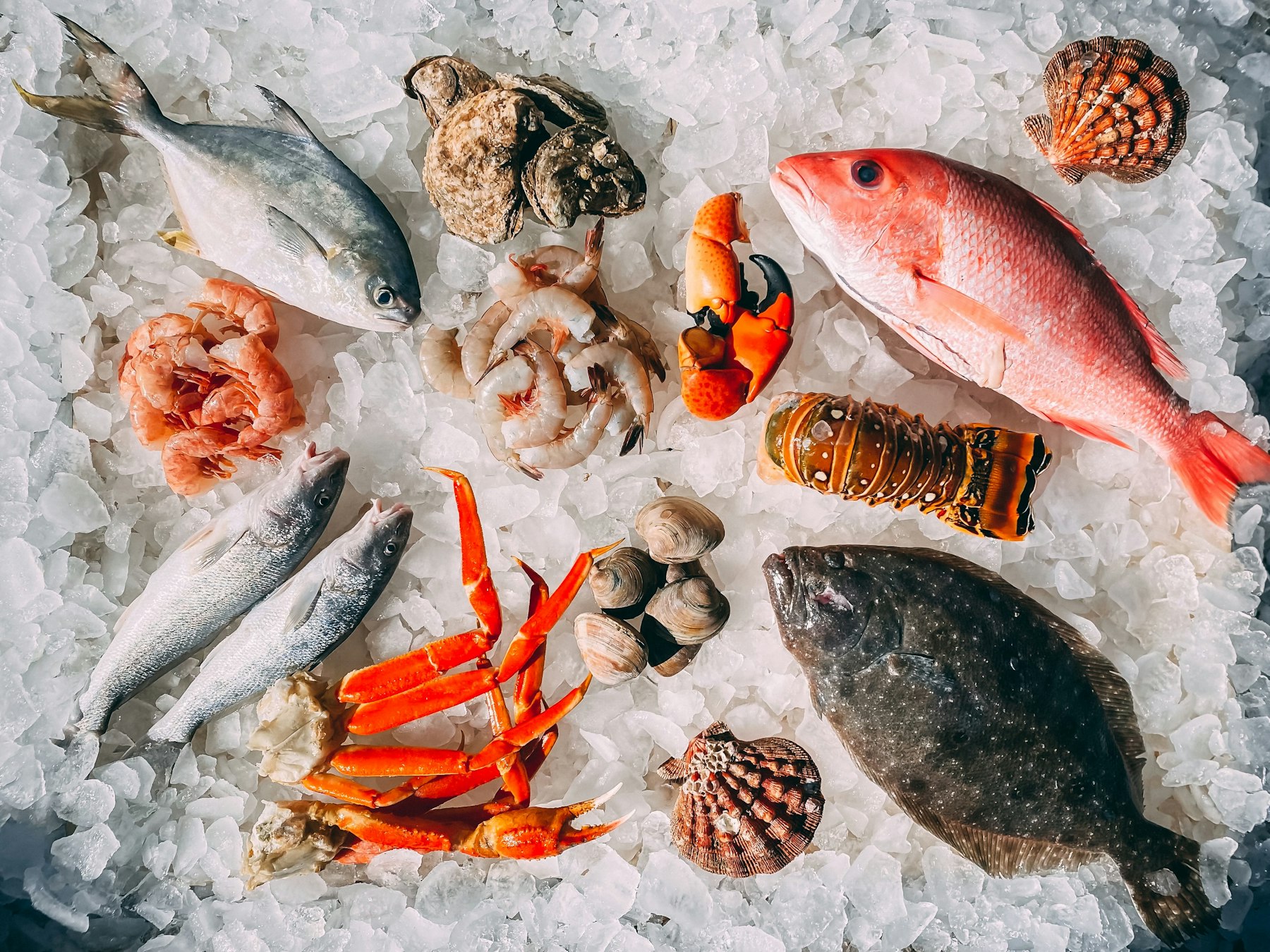
Harvest, chill, prepare
When the fish reach harvest weight they are taken from the cage, killed humanely, bled and put on ice. Processing on the same island — gutting, filleting, freezing, packing — keeps the chain short and the origin simple to state: Dalma. The plant is matched to the cages at 20,000 tonnes. Shrimp and mud crab, later, follow the same rule: raise them here, prepare them here.
How we cultivate
The crop lives in water, and water is daily work.
Seed from the island
Juveniles are meant to come from the Dalma hatchery, so a cycle is not left waiting on a distant supplier.
Feed beside the fish
The mill is part of the same site, and it is sized so feed is not the constraint on the cages.
The water that suits the crop
Cages use the open Gulf. Shrimp, later, are planned in recirculating water, kept apart from the cages.
Health as daily work
Veterinary care, fish health and measured feeding are part of how the hatchery and the cages are meant to be run.
A short road to the table
Grow the fish and prepare them on one island, so the origin stays simple to state.
Photographs are real records of aquaculture and seafood — cages, hatchery tanks, feed, and harvest on ice — not generated images.