
Design capacity
Feed plant
Pellets mixed on Dalma, sized so feed is not the constraint on the cages.
Pellets mixed on Dalma, sized to the mouth of the fish.
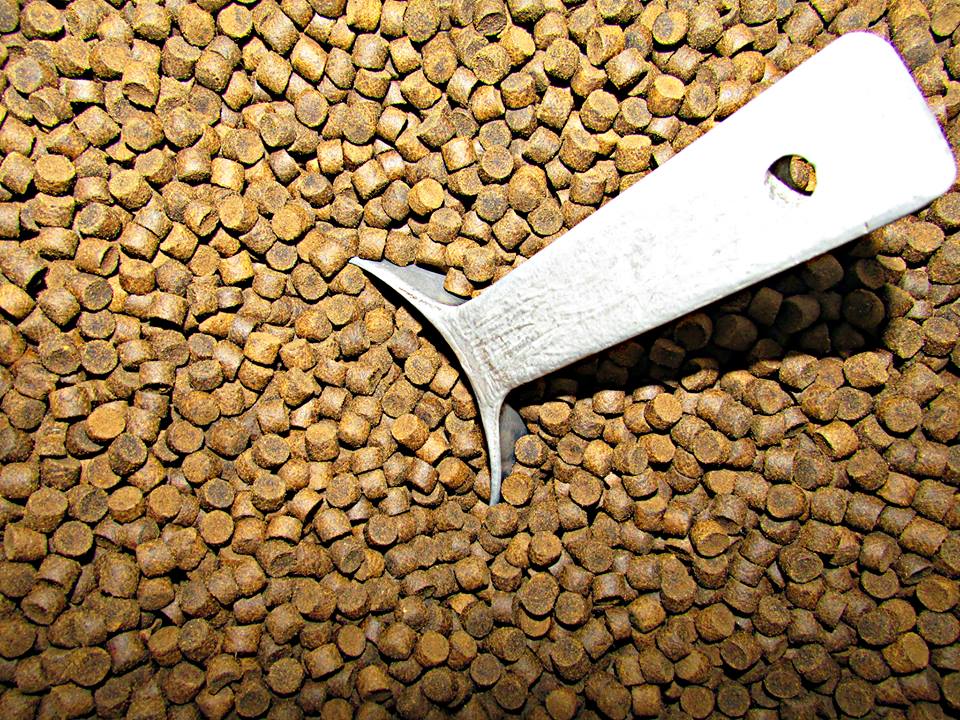
The mill is drawn three times the cages, so feed sits ahead of the crop.
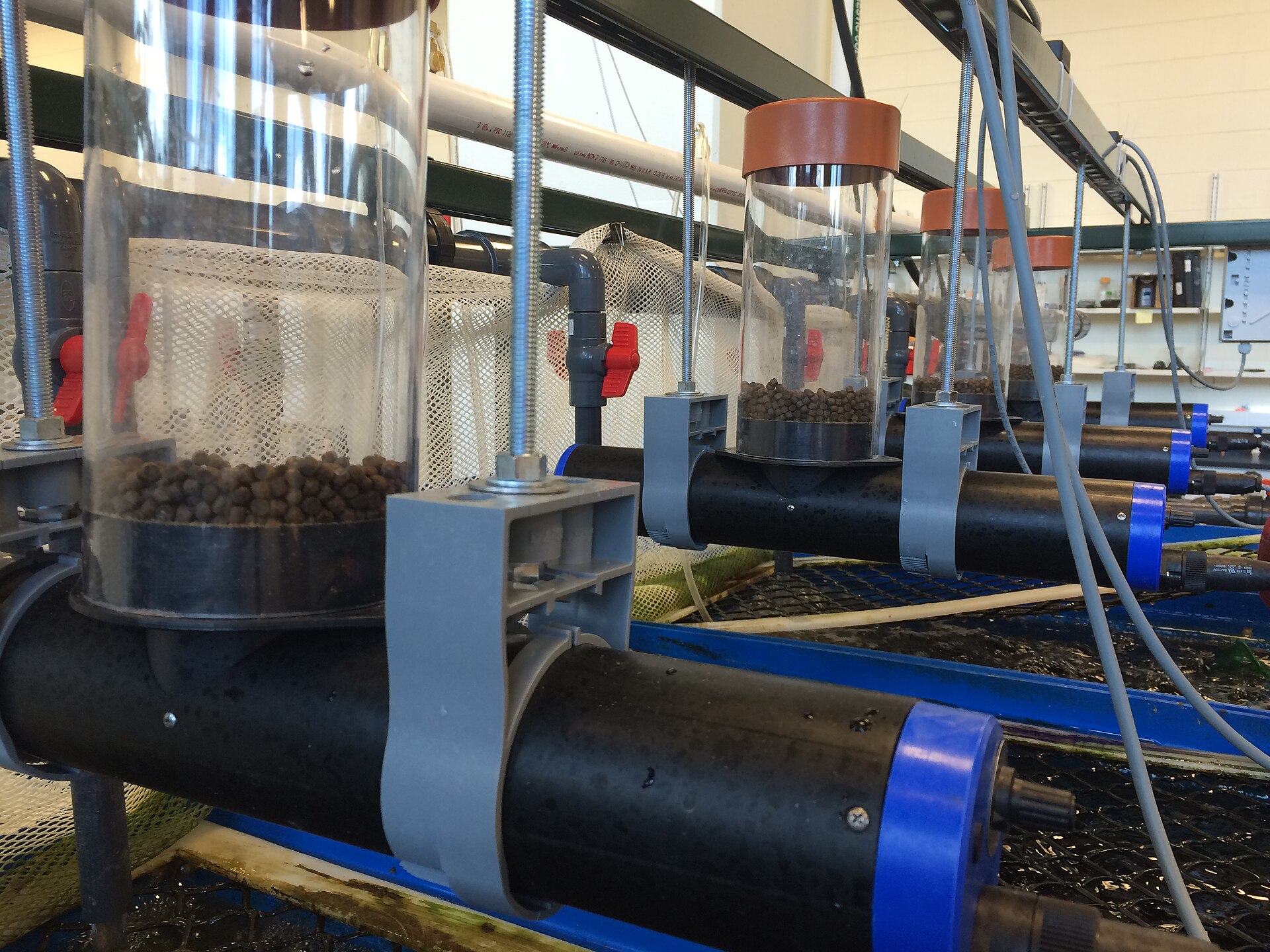
Ration is dosed into tanks, then into cages — not dumped over the rail.
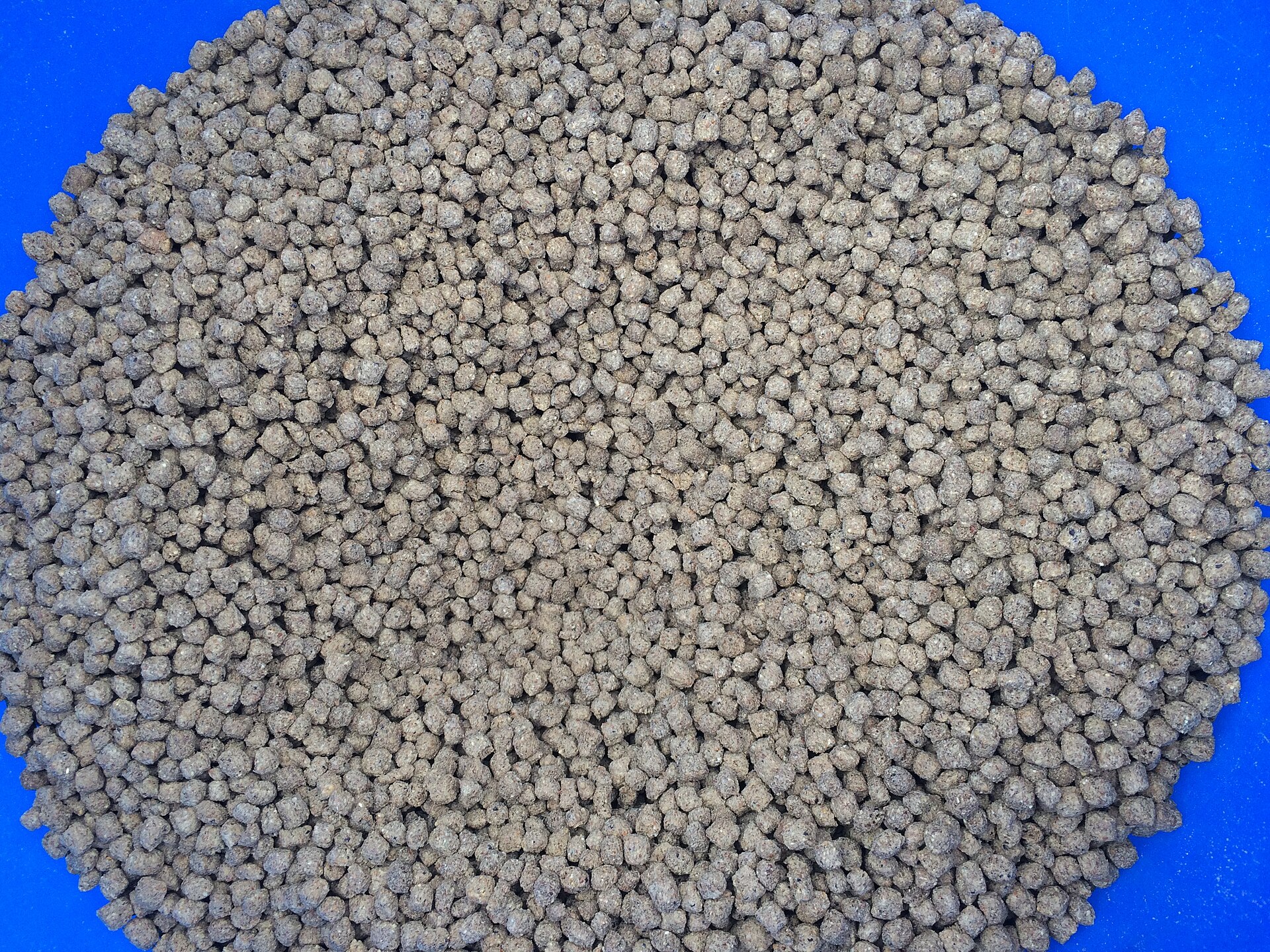
Grow-out fish eat compressed pellets: protein, oil, starch and vitamins, cut to the mouth of the animal. The mill on Dalma exists so that ration is mixed beside the fish, not a shipment away.
The process is grind, mix, extrude, dry, grade and store — then dose. Automatic feeders put a measured amount into hatchery tanks and, later, into cages. Dumping feed over the rail is how water fouls and fish starve in the same week.
The mill is designed for 60,000 tonnes a year. That is three times the 20,000-tonne cage plant, so feed is meant to sit ahead of the crop. If the cage figure in the desk changes, the public site recomputes that ratio.
This page is the mill as cultivation, not as a warehouse. Diets are part of husbandry. A feeding year is a year of grow-out.
The process
How this plant is run, step by step.
Each step is cultivation work — water, feed, transfer, ice — not a portrait of the company.
01
Bring ingredients onto the island
Protein, oil, starch and vitamins arrive on Dalma so the mill can mix beside the animals. A ration that has to wait on a delayed shipment is already too late for a cage.
02
Grind and mix the diet
The mill grinds and blends to a formula sized for marine fish. This is not kitchen scrap. It is a measured diet, mixed on the same lease as the cages.
03
Extrude pellets to mouth size
Compressed pellets are cut to the mouth of the animal at each stage — larva, fingerling, grow-out. Wrong size means wasted feed and dirty water.
04
Dry, grade and store
Pellets are dried and graded, then held on the island so weather does not empty a hopper. The mill is drawn at 60,000 tonnes — three times the cages — so feed sits ahead of the fish.
05
Dose the hatchery tanks
Automatic feeders put a measured ration into onshore tanks. Dumping feed is how ammonia rises. The mill exists so the hatchery can wean without waiting on a bag from another emirate.
06
Dose the cages, slowly
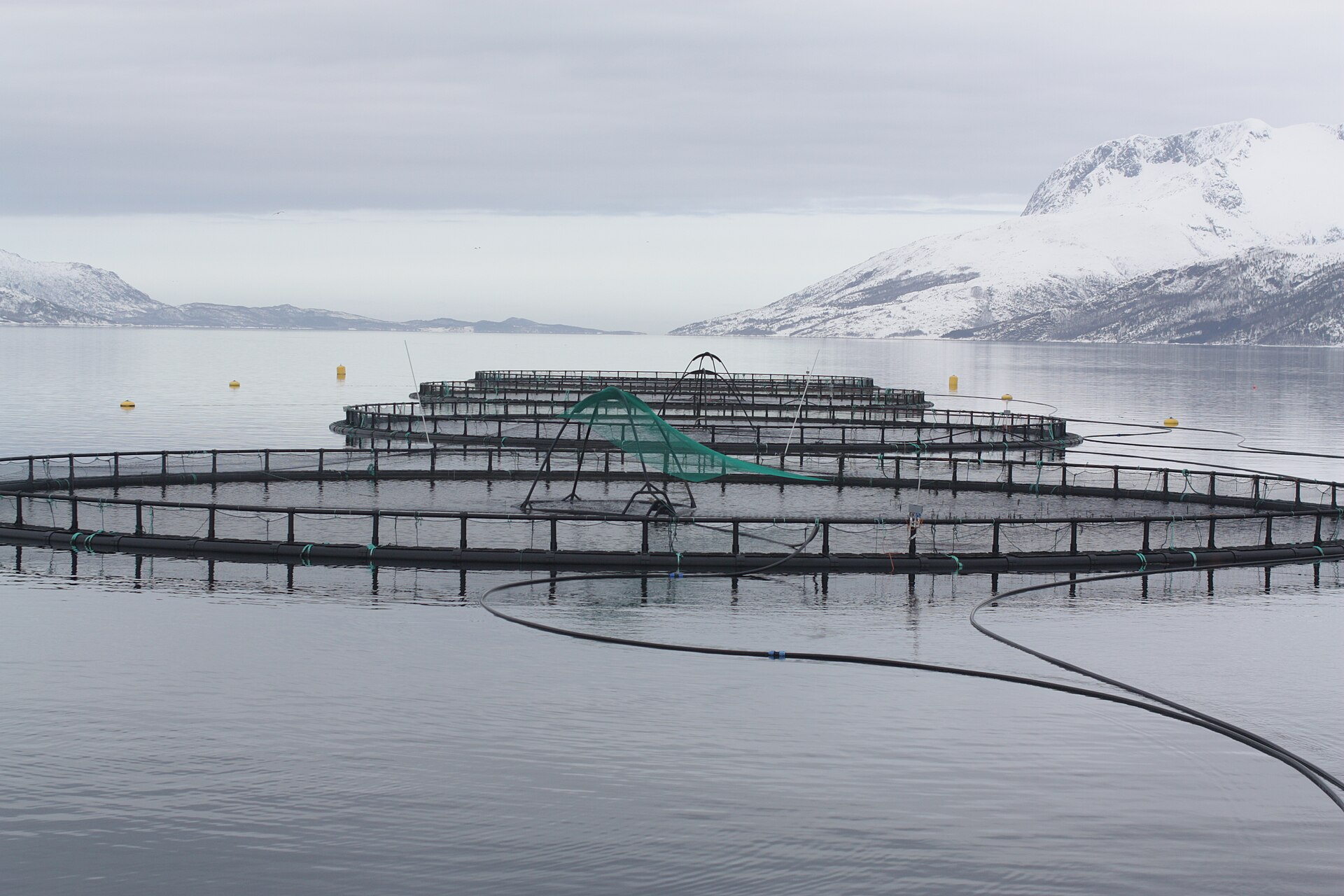
The same pellets go to the rings at sea. Slow feeding is husbandry: fish take what they need, uneaten feed does not foul the Gulf, and a year of grow-out stays a feeding year.
In the chain
Four plants, in the order they are meant to work.
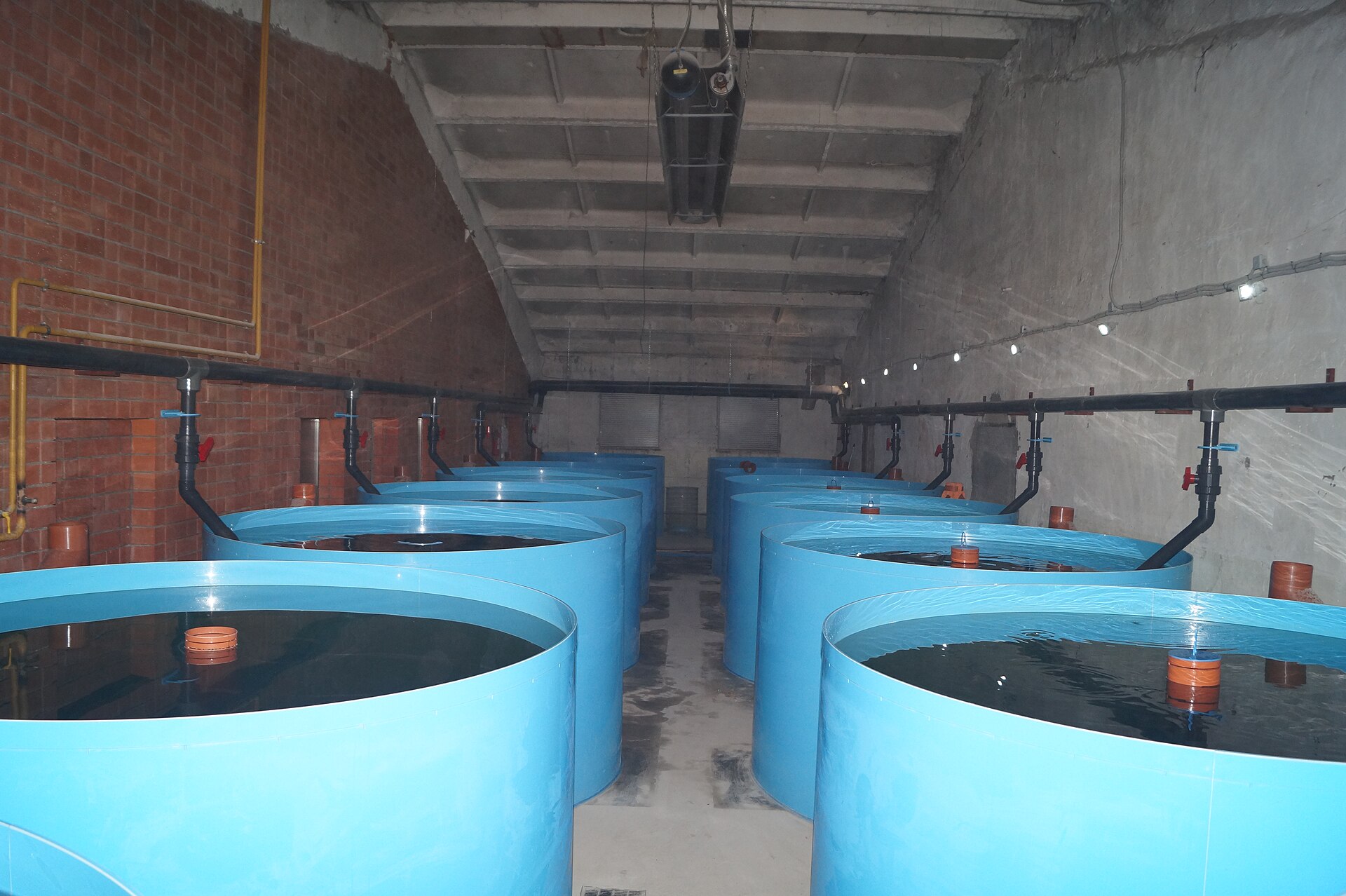 01
Hatchery
Broodstock, eggs, larvae and juveniles — seed for the cages, raised onshore.
Open the process- 02
Feed plant
Pellets mixed on Dalma, sized so feed is not the constraint on the cages.
Open the process - 03
Sea cages
Floating circular cages in 250,000 m² of Arabian Gulf water.
Open the process 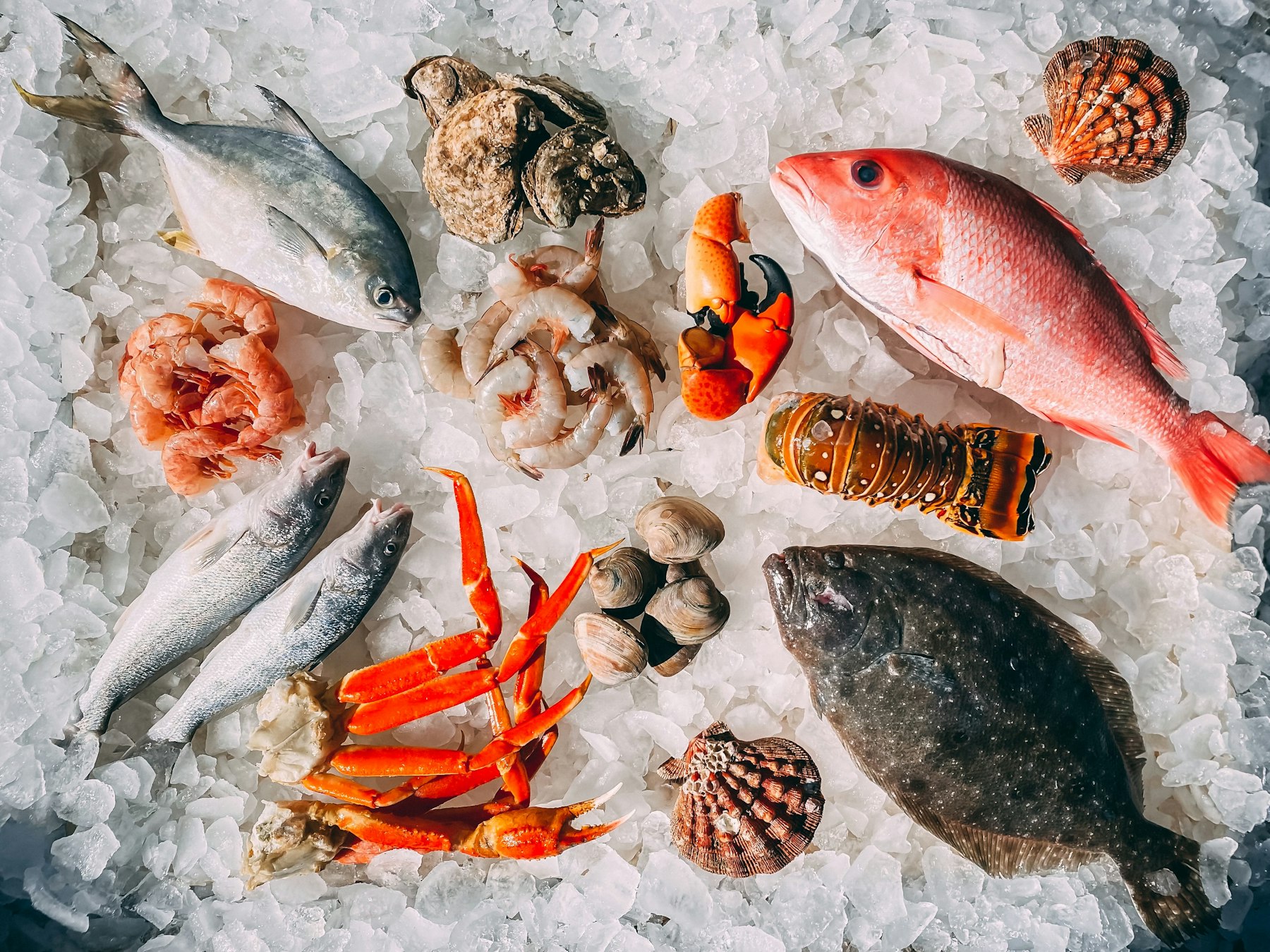 04
Processing
Harvest, chill and prepare on the same island as the cages.
Open the process